Friday, December 9, 2011

This is what solar looks like!

By this time next year, a solar photovoltaic (pv) system will be producing more than 100 percent of our electricity; I’ll be wondering by what miracle did this happen? I’ll forget what prompted me to get a solar site assessment. I’ll forget quizzing exhibitors at the Green Expo. Solar home tours... huddled in basements getting the lowdown on utility meters that spin backwards...staring up at rooftops... these memories will have faded. When did Brian and I actually agree to pursue this? Was it on the ride home from the Midwest Renewable Energy Fair in Wisconsin a couple of years ago? When did I start imagining myself as a power producer? Was it during my Energy Committee days?

Once the installation is complete, people will have questions for us as they begin to imagine themselves as power producers too. How big is the system? Why did you go with Sanyo? Why micro-inverters? How much did it cost? That's a big one. Some of them might actually be interested in seeing the spreadsheet I designed to help us sort through the various proposals. It was a headache. But, somehow we are on the other side of a big decision and that feels pretty good.

How can you put yourself on the path to solar pv ownership?

Talk directly with homeowners who have already made the leap. Check out the American Solar Energy Society for details about their annual solar tour www.ases.org. If you can't wait for the tour, be bold. Knock on someone's door. Ask them about their pv system.

Get a solar site assessment. Put it on the calendar this week. The +-200 dollars it costs for an assessment and a design proposal (see ours pictured above) supports local jobs and a solar industry (a cool thing), can inspire you to take another step toward being a power producer, and is counted toward the cost of a system should you make a purchase (check with individual vendors on that one). Personally, I think a solar site assessment would be a lovely Christmas gift for anyone who is dancing with the idea. In Minnesota, see www.mn.gov/commerce/energy/topics/clean-energy/Solar.jsp for accredited vendors. Elsewhere, start with your state’s commerce or energy department websites. Stick your toe in the pool. Get an assessment.

Check out available federal and state solar rebates: www.dsireusa.org.

Take a step. Then see what happens.

Thursday, September 29, 2011

Keeping the Kitchen Clean with Composting

Is that the garbage truck? Do I have the wrong day? No? Either way, a mad dash to the get the trash out is a thing of history. I haven’t done that in a long time, ever since we started composting. There is freedom in that.

While a person might worry that backyard composting will attract vermin, or that the compost bucket will be a smelly eyesore, or that emptying it will somehow be a bigger chore than remembering to empty the garbage or chasing down the garbage truck in your bathrobe, in my experience composting has made these things better, not worse. Because there is no waiting for (or missing) garbage day, food scraps will neither stink up the kitchen nor entice critters in the alley.

If you really want to keep things tidy, line the compost bucket with a sheet of newspaper. This will keep it cleaner longer. Or, try covering the food prep area with a newspaper and collect food scraps there. The cost of making a mess is zero. Simply roll up the paper and place it in the compost bucket when it's time to clean up.

As a bonus, using newspapers like this will help keep your compost pile balanced as it needs both “green” material such as food scraps, and “brown” material such as leaves or newspapers.

For more information about how to get started composting, visit the Gardening Matters website.


Line the compost bucket with a sheet of newspaper. Personally, I found that lids and filters for compost buckets aren't necessary and just get in the way.


When lined with paper, the bucket stays cleaner longer.


Cover your food prep space with newspaper.


Collect food scraps on the newspaper. There is a lot of room for error.


Covering the backsplash with newspaper will keep it cleaner.


To clean up, roll up the newspaper with the food scraps...


...and place it in the compost bucket.

Thursday, July 28, 2011

A Piece of Crap

Have you ever been stuck with a piece of crap? Maybe it was a broken appliance or a pair of shoes, a piece of furniture or a gadget that couldn't be easily repaired. I have.

Nothing could be done with prematurely worn out sandals because the uppers weren't leather. "Pitch them!" I was told. But, they're still taking up closet space, awaiting the day that I will figure out a solution that a seasoned cobbler couldn't imagine.

At least crappy shoes can't kill you. Last spring while she was eating, my sister discovered a shard of plastic in a batch of lasagna she had just made, most of which she had given away to new parents. After frantic phone calls, texting and email messages that warned the young couple, we discovered the source of the plastic: A Hamilton food processor. Years ago I had the same issue with a Hamilton blender. A piece of plastic ended up in my Margarita.

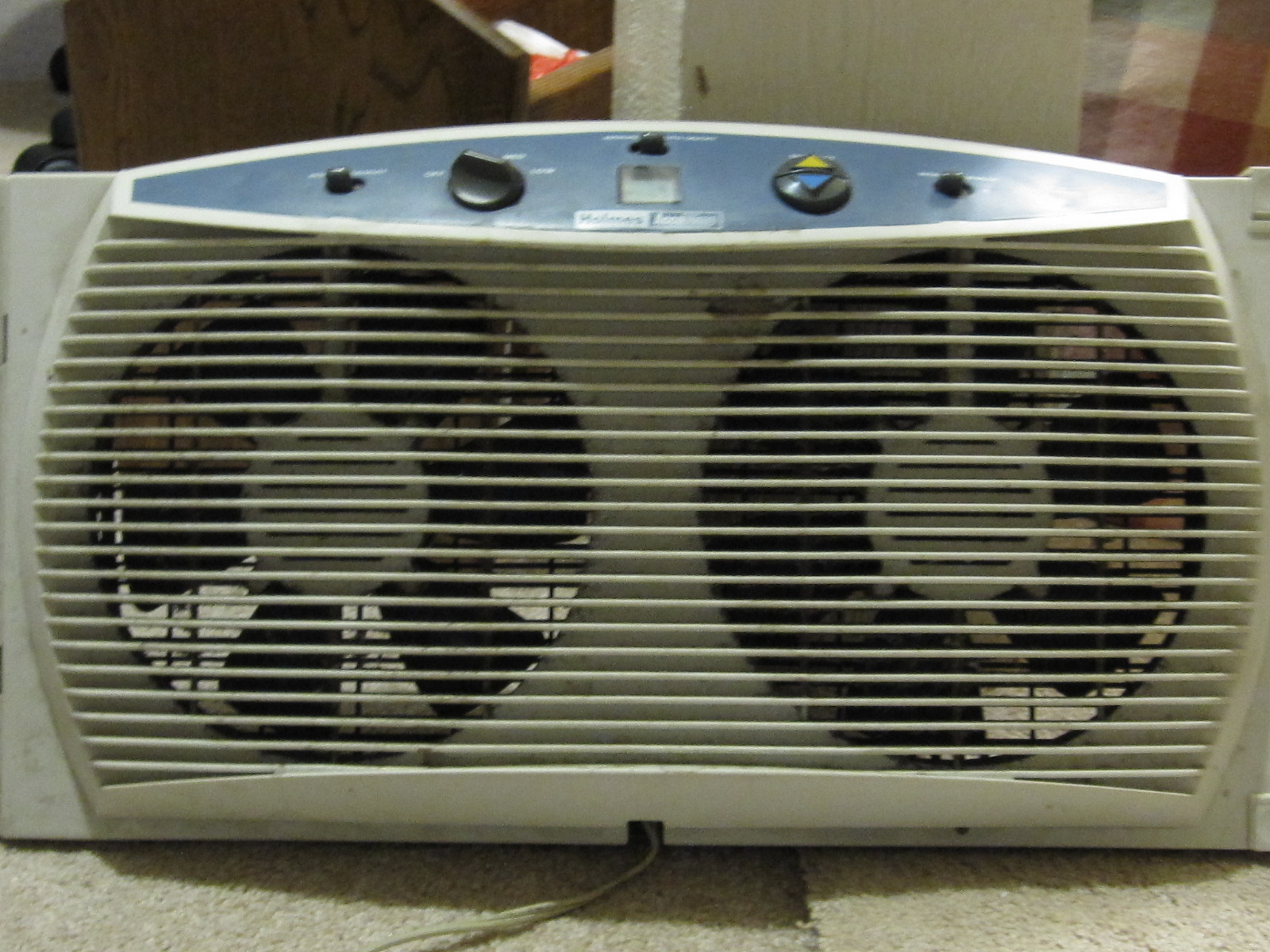
My latest gripe concerns a fan that is impossible to clean.


Prompted by the heat wave, I finally made the time to get it out of storage. It was really dirty and needed a thorough cleaning, but I couldn't remove the grill due to ill-designed tabs that held the fan together.


Unable to believe that anyone would design such a thing, I asked the manufacturer for advice. They replied:
"If you are unable to get the fan apart with out damaging the tabs, you can clean it a different way. With our other models we suggest taking a can of compressed air and spraying it in the fan. This usually removes most of the dirt and dust."
In other words, someone would design a piece of crap on purpose.

Thursday, July 21, 2011

Vanishing Lunch Meat

This ad jumped out at me. First you see this:


Then you turn the page and you see:


Did you notice anything?

The trail of packaging left behind the vanishing lunch meat is a given; we are not supposed to notice it. It says so right there on the page. “Now you see it… Now you don’t.”

I don’t?

Is there any value in taking the time to notice the assumptions embedded in these kinds of messages before they wash over us like a morphine drip? For example, what do ads for kitchen garbage bags, a stopover for those invisible lunch meat packages, assume? Kitchen scraps are garbage. It follows that your kitchen garbage stinks (Buy the scented bags...). It's unsightly (There's a new "blackout" bag you can buy...) and it's messy (Good news! You can buy bags that are strong enough hold a piano...).

These ads wouldn't fly without a widely accepted assumption that kitchen compost is garbage. Without it, those pine fresh nylon-reenforced roles of plastic would join the Bacon Genie in the Hucksters Hall of Fame.
  • Hefty Blackout Bag Commercial - Video
  • "The Smell is in your kitchen" - Video
  • Hefty Ulta Flex Bags - Video
  • Hefty Steel-Sak Bags - Video
  • Jackie Chan Hefty Ad - Video
  • 9 News Colorado - Garbage Bag Face Off - Video
It's difficult to escape the Kitchen Compost is Garbage message. The other night, Brian and I were watching a documentary where a subject in the film pitched an overripe mango in the trashcan. Brian immediately looked to me for a reaction and he got it.

"Someday, we'll look at that and say, 'You're kidding? People did that?'"

Thursday, July 14, 2011

Learning to Manage Food

Has our wealth completely killed the instinct to preserve and cherish the stuff that keeps us alive?

We waste an embarrassingly amount of food in our house. Brian brings home a carton of blueberries and I think, “Let’s be honest. Just put them in the compost pile.” Or, if the last leaf of lettuce ends up in my lunch with the last slice of bread, I make an announcement as if recognition were in order. Now I’m on the Daily Show telling the world, “Keep your herbs in a glass of water. Better yet, grow your own!”

In reality, we are far from model citizens. We waste a lot of food even though I’d rather admit to skipping out on my own wedding to shoot heroin and watch COPS than tell you that I wasted a carrot. Realizing that it takes two years to grow a pineapple sharpened my sensitivity to that vague uneasiness most of us feel deep in our gut when the apple in the crisper gets mushy. So, I’m trying to learn better food management skills.

As it turns out, storing the parsley in a vase of water resulted in a slimy gag-inducing concoction. And mistrusting the bread crumbs I dried for – stuffing? – I gave them to the sparrows after a full week of pretending that I was Julia Child. On the other hand, the bruised tomatoes made a decent salad dressing. So, John Stewart should be calling any minute.

What are your tips for food waste prevention?

Thursday, July 7, 2011

What have you learned from the dirt?

The garden teaches patience and faith in small steps. It assures us that something is happening, even when it doesn’t feel like it. What have you learned from the dirt?

Thursday, June 30, 2011

Stay cool, put the shades down

Yesterday, when my friend Laurie mentioned that she was in a rush to get some things done in the garden before the heat wave came, I realized that I haven’t been paying attention to weather forecasts. So, it’s going to be hot. I don’t want to know the number. I’ll just keep the shades down. I also have some left over reflective insulation I used behind the radiators last winter (it reflects heat back into the room instead of letting it be absorbed into the walls). I’ve already covered one window in the attic with it. Maybe it could be used elsewhere in the house?

To see how much of a difference shades can make, I measured surface temperatures with my handy little Black & Decker thermal leak detector, a birthday gift that might rival the View Master I got when I was a kid. This morning the shades on the south window were already down. However, one window on the east side was not shaded, letting a little bit of sun in to hit a chair. At about 9:10 a.m., the shaded part of the chair was 80.6 ⁰ F and the sunny part of the chair was 95.5 ⁰ F.